
Climate-Controlled Storage Dubai by E Furniture Storage
Climate-Controlled Storage Dubai Maintained at 18–24°C and 40–55% Humidity 24 Hours Daily Across Furniture, Vehicle, Business, Personal, and Luggage Storage Categories
Climate-controlled storage Dubai is a storage unit category that maintains continuous temperature and humidity regulation across the full storage period regardless of outside weather conditions. We operate climate-controlled storage Dubai capacity from [Location, Dubai] with every unit on the warehouse floor running at 18–24°C and 40–55% relative humidity, 24 hours daily, 7 days weekly, 365 days annually. Climate control at E Furniture Storage operates as the standard condition across every storage rental rather than a premium tier above an unregulated baseline option, given Dubai's climate leaves no operational middle ground for furniture, electronics, documents, or commercial inventory across any rental period extending beyond a few days.
The Dubai climate-controlled storage market splits between operators marketing climate control without continuous regulation, facilities offering climate-controlled units as a premium tier alongside cheaper unregulated options, and warehouse operators applying intermittent air conditioning across business hours rather than continuous regulation across the full rental period. E Furniture Storage occupies a different position — climate-controlled storage Dubai delivered with documented continuous regulation, multi-zone sensor monitoring, backup climate systems, and sensor log availability for customers verifying conditions across the rental period. Customers storing temperature-sensitive furniture, leather goods, electronics, archival documents, fine wine, or commercial inventory select E Furniture Storage climate-controlled storage for the documented climate specification rather than the headline marketing description that competitors apply across inconsistent operational standards.
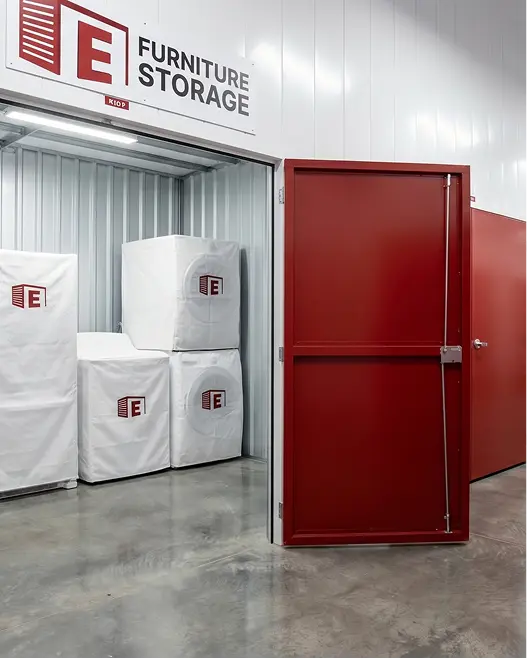
Tell Us What You're Storing — We'll Respond Within 2 Hours
Fill in the form and the storage team will send a written quote specific to your items and duration. No call centres, no automated replies — a real response from the people who run the facility.
How Does E Furniture Storage Define Climate-Controlled Storage Beyond the Marketing Phrase?
Climate-controlled storage operates as a marketed term across nearly every Dubai self storage facility. The phrase appears so often that the term loses meaning, given facilities apply the description to operations ranging from continuous 24-hour temperature regulation to a single air-conditioning unit running across business hours alone. The technical specification matters because customer outcomes depend on documented operational standards rather than marketing language repetition.
Temperature Range: 18°C to 24°C
Maintained across every zone of the warehouse floor with multi-zone sensor monitoring.
Humidity Range: 40% to 55% RH
Regulated through dehumidification systems running continuously across the warehouse.
Operating Hours: 24/7/365
Running daily without scheduled gaps for nights, weekends, or public holidays.
Air Filtration Systems
Removing dust, particulate matter, and airborne contaminants across the warehouse footprint.
Active Pest Control Protocols
Running monthly preventative cycles across the full warehouse perimeter and interior zones.
Continuous Climate Monitoring
Digital sensors logging temperature and humidity readings continuously for facility-wide review.
Backup Climate Systems
That activate automatically if primary regulation fails for any operational reason.
Verification on Request
Sensor log access available to customers storing high-value or climate-sensitive contents.
Which Dubai Climate Conditions Make Continuous Climate-Controlled Storage Operationally Necessary?
Dubai's outdoor climate sits among the harshest storage environments in the global market. The 6 climate conditions that define the storage challenge across Dubai and the wider UAE are listed below, given operational climate-control standards must respond to the actual conditions outside the warehouse rather than averaged regional benchmarks.
Dubai Climate Conditions
Operational Storage ChallengesSummer Outdoor Temperatures
Crossing 45°C through July and August with peak readings extending past 50°C in afternoon hours.
Coastal Humidity Levels
Reaching 80% to 95% relative humidity across coastal zones during summer months and humid weather cycles.
Diurnal Temperature Variation
Between night and day producing thermal-cycling stress across stored items inside uncontrolled storage.
Sandstorm & Dust Exposure
Depositing fine particulate matter across stored items inside facilities lacking continuous air filtration.
Sea-Air Salinity
Affecting storage facilities near coastal zones with corrosion potential across metallic stored items.
Limited Cool-Season Window
Manageable storage temperatures only available across November to March outside the harsh summer cycle.
Damage Profiles
Inside Uncontrolled StorageWood Furniture Warping & Joint Failure
Timber expanding and contracting under thermal cycles producing structural damage across rental periods.
Leather Goods Cracking & Mildew
Surface oils evaporating under heat and mould forming under humidity exposure.
Fabric & Textile Mildew Colonisation
Mould growth establishing inside packed items, upholstery, and stored garments.
Electronics Oxidation & Battery Failure
Circuit boards corroding and lithium batteries swelling under heat-humidity exposure.
Document & Paper Degradation
Pages yellowing, ink bleeding, and binding adhesives failing under uncontrolled conditions.
Lacquer Crazing & Finish Degradation
High-gloss surfaces developing fine cracks under thermal stress cycles.
Adhesive Bond Failure
Glues, tapes, and bonding agents losing strength under temperature swings across composite items.
Wine, Spirits & Specialty Goods Deterioration
Heat accelerating oxidation, drying corks, and degrading product quality.
E Furniture Storage maintains continuous climate regulation because the damage profiles above develop progressively across rental periods. Dubai's climate produces damage that linear-time accounting underestimates compared to actual cumulative exposure inside storage units.
How Does E Furniture Storage Handle Climate System Failures Across the Warehouse?
Climate system failures occur inside any continuously operated facility regardless of equipment quality or maintenance discipline. The operational difference between facilities sits in failure response rather than failure prevention, given the question is not whether equipment fails but how quickly the facility detects, responds, and restores normal operating conditions.
Backup Climate Units
That activate automatically when primary regulation systems fail beyond defined thresholds.
Real-Time Detection
Through continuous sensor monitoring identifying drift conditions before customer items face significant exposure.
On-Call Maintenance Response
With maintenance personnel available outside standard operating hours for urgent climate restoration.
Insurance Coverage for Climate Failure Damage
Activating from day one of every storage rental at no additional charge.
Customer Notification Protocols
For major climate events affecting stored items across multiple units across the warehouse.
Post-Incident Reporting
Documenting failure causes, response actions, and restoration timelines for affected customers.
How Does E Furniture Storage Monitor Climate Conditions Across the Warehouse Floor?
Climate-control quality at E Furniture Storage depends on monitoring infrastructure rather than HVAC equipment alone. A warehouse running expensive climate equipment without monitoring infrastructure cannot detect zone-level temperature drift, equipment failure, or humidity excursion until customer items already show damage. The 6 climate monitoring standards applied across the E Furniture Storage warehouse are listed below.
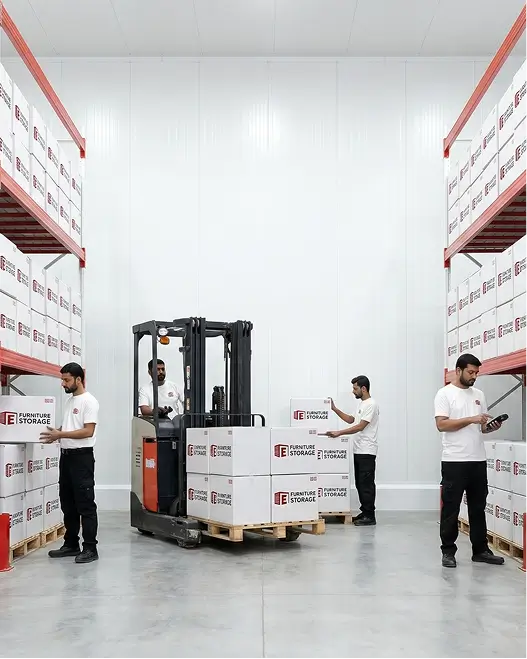
Multi-zone sensor placement across every operational zone
Temperature and humidity readings logged independently per zone for facility-wide review.
Climate Monitoring Standards
Applied Across Every Zone- Multi-zone sensor placement: across every operational zone of the warehouse with temperature and humidity readings logged independently per zone
- Continuous data logging: with sensor readings recorded at frequent intervals across the 24-hour operating cycle for facility-wide review
- Real-time alert systems: triggering maintenance notifications when readings drift outside the target range rather than relying on scheduled checks
- Sensor calibration cycles: running periodic verification against reference standards to maintain measurement accuracy across the monitoring system
- Backup monitoring systems: providing redundant sensor coverage if primary monitoring infrastructure fails for any operational reason
- Customer access to sensor logs: available on request for customers storing high-value or climate-sensitive contents across long-term rentals
Which Service Categories Operate Under Climate-Controlled Storage at E Furniture Storage?
Climate-controlled storage at E Furniture Storage applies across every service category rather than as a separate category alongside unregulated alternatives. The 6 service categories operating exclusively under climate-controlled storage at E Furniture Storage are listed below.
Furniture Storage Dubai
Sofas, dining sets, antiques, pianos, and designer pieces under continuous climate regulation.
Personal & Household Storage
Full apartment contents, villa furniture, and life-transition holdings.
Business Storage Dubai
Office furniture, document archives, e-commerce inventory, and commercial holdings.
Vehicle Storage Dubai
Cars, motorcycles, boats, and specialised vehicles in covered climate-appropriate bays.
Luggage Storage Dubai
Suitcases, travel bags, and packed personal effects across monthly rentals.
Long-Term & Short-Term Storage
Identical climate standards applied across all rental term lengths.
Which Storage Categories and Item Types Demand Climate-Controlled Storage Beyond Optional Upgrades?
Climate-controlled storage demand in Dubai concentrates around item categories that suffer measurable damage inside uncontrolled storage. The 8 item categories most vulnerable to uncontrolled Dubai storage are listed below, given accurate vulnerability profiles support better customer decisions across rental categories and term lengths.
Every storage unit runs at 18–24°C and 40–55% relative humidity, 24 hours daily, 7 days weekly, 365 days annually. Climate regulation runs through nights, weekends, public holidays, and Ramadan — a single 12-hour gap restarts the damage cycle the system exists to prevent.
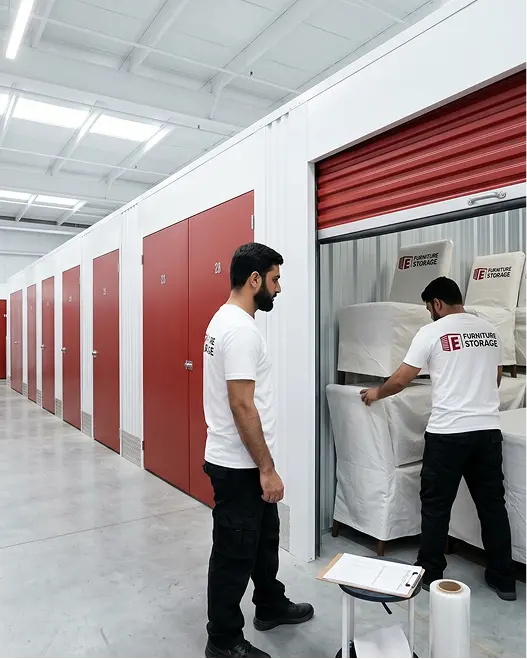
The 8 item categories most vulnerable to uncontrolled storage
If your storage unit holds anything on this list, climate control isn't optional — it's the difference between recovering items intact and writing them off.
Furniture Across All Material Categories
Solid wood, veneered, leather, upholstered, and lacquered pieces vulnerable to thermal and humidity damage.
Antique Cabinets & Heritage Pieces
Hide-glue construction, aged timbers, and historic finishes degrading faster than modern equivalents.
Original Artwork & Framed Pieces
Paintings, prints, photography, and decorative wall art under canvas-tension and pigment-stability requirements.
Pianos & Stringed Instruments
Wooden bodies, soundboards, and string-tension systems requiring climate stability for acoustic preservation.
Electronics & Consumer Technology
Televisions, audio systems, computers, and gaming equipment with circuit-board sensitivity to humidity.
Documents, Archives & Printed Materials
Under retention requirements of 5 to 10 years where paper preservation matters across the storage period.
Cosmetics, Perfumes & Personal Care Goods
Formulations separating, packaging deforming, and shelf life shortening under heat exposure.
Wine, Spirits & Specialty Food Goods
Temperature stability supporting flavour preservation, label integrity, and product authenticity.
How Does Climate-Controlled Storage Pricing in Dubai Compare With Uncontrolled Storage Operators?
Climate-controlled storage pricing in Dubai sits above uncontrolled storage pricing across every facility offering both options. Operators offering climate control as a premium tier charge meaningful percentage premiums for the climate-controlled option. Operators specialising exclusively in climate-controlled storage price against the operational cost of continuous regulation rather than against uncontrolled benchmark rates.
Cost Factors Driving Pricing Differences
Applied across climate-controlled operations-
Continuous HVAC Operating Costs
Electricity, refrigerant, and equipment depreciation across 24-hour operating cycles.
-
Dehumidification System Operations
Running continuously to maintain humidity ranges across coastal humidity exposure.
-
Backup System Maintenance
Keeping redundant climate equipment operational and tested for failure-response readiness.
-
Monitoring Infrastructure Costs
Sensor networks, data logging systems, and alert response coordination.
Reflects operational reality of continuous regulation rather than commercial markup
- High-value furniture justifies climate-controlled storage on financial grounds alone
- Electronics and documents require climate stability for preservation across rental periods
- Commercial inventory benefits from damage prevention across seasonal holding cycles
- Low-value bulk items rarely justify the premium given tolerance to Dubai conditions
- Construction materials and inert goods carry replacement values below climate-control rental difference
- Item value against rental cost forms the core decision framework across the storage period
Common Questions About Climate-Controlled Storage at E Furniture Storage
Temperature ranges, continuous regulation, climate verification, backup systems, insurance coverage, item suitability, air-conditioning comparison, and specialty goods storage — covered below. If yours isn't here, the team replies inside 2 hours.
Need a faster answer?
Send your climate-controlled storage requirements directly — we'll come back with unit availability, pricing, and timing.
WhatsApp the Logistics Team